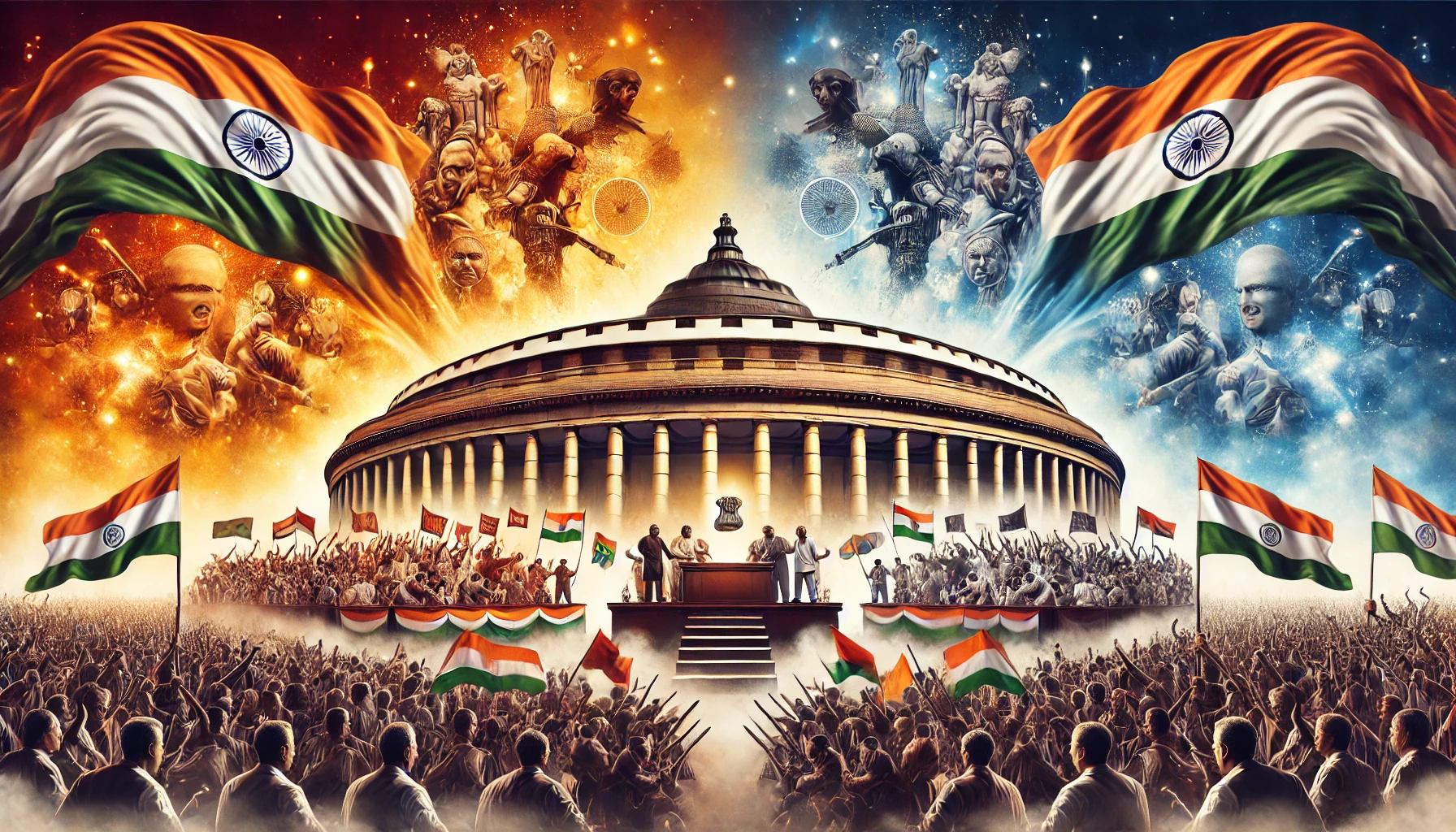
The simmering battle between Prime Minister Narendra Modi and Arvind Kejriwal, the leader of the Aam Aadmi Party (AAP), has drastically impacted the politics of India. Several confrontations, debates, and even scuffles for power like Chai Pe Charcha and Tiranga Yatra have happened over the years. As of February 2025, this ongoing tussle has reached a tipping point of power and recent events have shown that the table has turned.
Historical Context: The Genesis of the Rivalry
Arvind Kejriwal emerged over a decade ago with his activism against corruption showcasing strong winds of change in Indian politics. Along with Aam Aadmi Party (AAP) being built off the principle of fighting corruption, Kejriwal’s anti-corruption movement single handedly gave him the spotlight. This spotlight gave him the ability to challenge seasoned politicians like Narendra Modi. With both of these leaders battling for power in Delhi, several confrontations led to disagreements.
The 2024 General Elections: Upcoming Changes
With the new election in 2024, the Bharatiya Janata Party was led by Modi and saw new challenges from opposing parties. The party, while remaining in power, lost out on their major seat, in resultant of the AAP party having pro-poor policies and them holding up in Delhi. With the AAP gaining high power, the party faced multiple allegations regarding corruption which formed a shadow against AAP’s administration.
Legal Troubles and Political Implications
In 2024 March, the public face of AAP, Arvind Kejriwal, was arrested leading up to mass protests by his supporters claiming that the Modi government was using political force to destroy opposing parties. He was notably arrested due to misuse and improper allocation of liquor licenses. His arrest set off a new wave of aggressive discussions on the use of investigating agencies against government officials. In case the allegations AAP charged against him bore fruit, Kejriwal claimed to be on the front of “opposing a regime that strokes fear unto its citizens.”
The 2025 Delhi Assembly Elections: A Turning Point
The February 2025 Delhi Assembly elections set a new precedent for political activity in the city. The assembly elections also marked the return of the BJP after 27 years, with the 2025 elections awarding them 48 out of 70 seats. This was almost akin to a tactical masterstroke for Modi, with the victory granting BJP the ability to renew their supremacy in Indraprastha. On the contrary, AAP’s victory was extremely underwhelming as they only claimed 22 seats, which is a major decline from their previous parliament dominance. There were several reasons for this including voter tiredness, corruption charges on Kejriwal, and the BJP’s service and infrastructure development promises.
Rekha Gupta: The New Face of Delhi’s Leadership
Following the BJP’s win, Rekha Gupta, an experienced politician and former college student leader, got the ticket for Delhi’s Chief Minister. At the age of 50, Gupta became the 4th Chief Ministerial woman in Delhi. Gupta’s appointment is significant, not only because of her gender, but also because of the BJP’s calculated decision to give Delhi politics a new face. Apart from this, Gupta has committed to solving the rampant pollution and deteriorating infrastructural problems in the city, hoping to deliver on the promises made during her election campaign.
Modi’s Strategy: Consolidating Power and Addressing Middle-Class Concerns
In an effort to capture Delhi once more, Prime Minister Modi goes after the middle class, which forms a large part of the city’s population. The economic slowdown and rapidly increasing inflation resulted in a tough dissatisfaction for the urban voters. As a response, the BJP launched the campaign focusing on economic development, tax cuts, and promises to improve the standard of living in Delhi. This did a lot of passenger’s benefits and gained massive electoral support for the party.
The Road Ahead: Implications for National Politics
The broader political implication of BJP’s victory in Delhi shows that:
- Strengthened Position in the Upper House: Winning state elections enables the BJP to strengthen its position in the Rajya Sabha, ensuring that it has cross section of legislators that can facilitate the passage of bills at the national level without much hassle.
- Enhanced Control Over the Capital: Governing Delhi enables Better Control of potential protests and dissent in the heart of the nation.
- Impact on Opposition Morale: The AAP losing and Kejriwal’s legal issue can easily demoralize opposing forces leading to realignment of support.
Conclusion: A Dynamic and Evolving Power Struggle
The Indian political landscape is ever-changing as exhibited by the tussle between Modi and Kejriwal. The power dynamics are constantly changing and shifting. It would be interesting to witness the strategies and policies that both leaders pursue in the future as BJP controls Delhi, but the reasons for AAP’s emergence, such as transparency and effective governance, still persists.
FAQs
What led to the rivalry between Arvind Kejriwal and Narendra Modi?
The rivalry began with Kejriwal’s anti-corruption movement and his rise in Delhi politics, challenging Modi’s leadership and BJP’s dominance.
Why was Arvind Kejriwal arrested in 2024?
Kejriwal was arrested over allegations of corruption related to liquor license allocations, sparking protests and accusations of political vendetta.
How did BJP win the 2025 Delhi Assembly elections?
BJP won 48 out of 70 seats due to voter dissatisfaction with AAP, corruption allegations, and BJP’s strong campaign focusing on infrastructure and economic development.
Who is Rekha Gupta, and why is her appointment significant?
Rekha Gupta is the new BJP Chief Minister of Delhi, marking a strategic shift in BJP’s leadership and governance approach in the capital.
What are the national political implications of BJP’s victory in Delhi?
BJP’s win strengthens its position in Rajya Sabha, enhances control over the capital, and weakens the morale of the opposition parties.