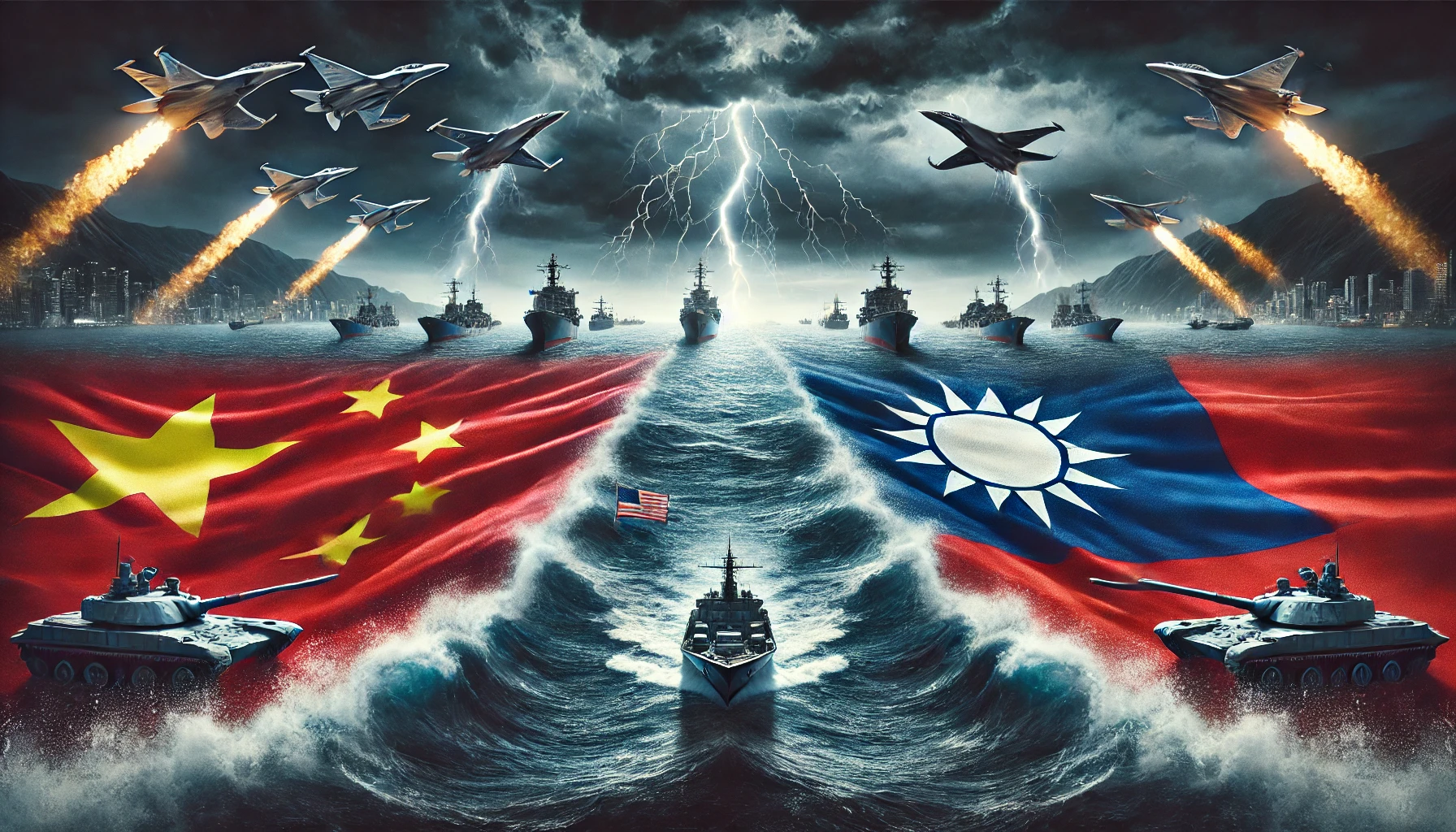
The tensions between China and Taiwan have been a global concern for a long time and have always been a hot topic of politics for the Taiwan Strait, with its recent developments being flagged as a potential military clash. This analysis holistically views the background context, recent developments, strategic details and forecasts basing the focus on the relationship between China and Taiwan.
Historical Context
To understand the current status of affairs, it is critical to analyze the history of China-Taiwan relations. The origin of this dispute takes us to the time of the Chinese Civil War which stemmed between 1927 and 1949. This ultimately led to the People’s Republic of China being set up on the mainland simultaneously while China’s “Guo-Min-Dang” (Nationalists”) retreated to Taiwan and set up there. The condition since then has been that China regards Taiwan as an independent rebel province while Taiwan prefers to consider itself as self-governing while it has its own multi national identity.
Key Historical Milestones:
- 1949: Separation
The Chinese Civil War saw Mao Zedong firmly placing power in the hands of the communists with Beijing being captured. The defeat of Chiang Kai-shek’s KMT nationalists saw the latter retreat to Taiwan. With a cut-off from Mainland China, a new government was established in Taipei.
- 1971: UN Recognition
In October, a pivotal point came for China as in the UN General Assembly session, they replaced Taipei and occupied their previous position.
- 1987-2016: Fragile Reconciliation
Change in the late 1987 saw Taiwanese citizens able to move towards the strong economic power of China. With families able to reunite, trade dramatically increased. War was unilaterally terminated in 1991 and most emergency rules were lifted by Taiwan. The beginning of direct negotiations commenced in Singapore in 1993.
Recent Escalations
In recent months, several key events have contributed to escalating tensions:
- Military Movements: The PLA has increased military drills around and above Taiwan. These exercises are deemed aggressive acts and have concerned Taiwan as well as international analysts.
- Diplomatic Strains: Increased visits by foreign representatives to Taiwan have aggravated Chinese authorities and generated a new round of reciprocal hostilities.
- Economic Pressures: China has applied economic restrictions against Taiwanese companies aiming to have an impact on Taiwan’s government and economy.
Strategic Considerations
There are multiple underlying factors that shape the strategic thinking of China and Taiwan:
- Military Capabilities: China has successfully upgraded its armed forces, while Taiwan has remained focused on defensive asymmetric warfare in case aggression comes. There is a discussion among experts on whether China would still be able to conduct an effective amphibious assault and the logistics of such an undertaking along with international responses.
- International Relations: The seat in Taiwan’s unofficial alliances, particularly with the United States, is an important pillar of its defensive strategy. The level and the nature of what, if anything, the US would do in a Taiwan Strait conflict is uncertain.
- Economic Interdependence: Taiwan and China both heavily rely on one another in semiconductor supply chains. There would be drastic financial consequences globally following a conflict making it ripe for prevention.
Potential Scenarios
With the current interplay of factors in focus, these are the potential scenarios:
- Status Quo Maintenance: All parties at the moment refrain from putting an end to direct confrontation without engaging in “face saving“ diplomatic or military rituals.
- Limited Skirmishes: Severe miscalculations could happen with less restraint, like low intensity confrontations or some niche conflict.
- Full-Scale Conflict: A full conflict might not be on the horizon, but if one were to happen, it would have a devastating impact on the surrounding regions and even the entire world.
Conclusion
The events in the Taiwan Strait are still dangerously tense, and while it is more complex than it seems, there are plenty of reasons to avoid full scale conflict. Closer diplomatic relations, open lines of communication and abiding by international laws and norms are extremely important to ensure that there is no escalation which could create global instability.
FAQs
Why are China-Taiwan tensions escalating?
Recent military drills, diplomatic disputes, and economic pressures from China have heightened tensions between the two regions.
What is the historical background of the China-Taiwan conflict?
The dispute dates back to the Chinese Civil War (1927-1949), when the defeated Nationalists retreated to Taiwan while the Communists established the People’s Republic of China on the mainland.
How is Taiwan preparing for a possible conflict with China?
Taiwan is focusing on defensive asymmetric warfare, strengthening alliances with the U.S., and securing its semiconductor industry to deter potential aggression.
What role does the U.S. play in China-Taiwan tensions?
The U.S. provides Taiwan with military aid and diplomatic support, but its level of direct involvement in a potential conflict remains uncertain.
Could a full-scale war between China and Taiwan happen?
While full-scale war is unlikely in the short term, miscalculations, military skirmishes, or diplomatic failures could escalate tensions into a serious conflict.