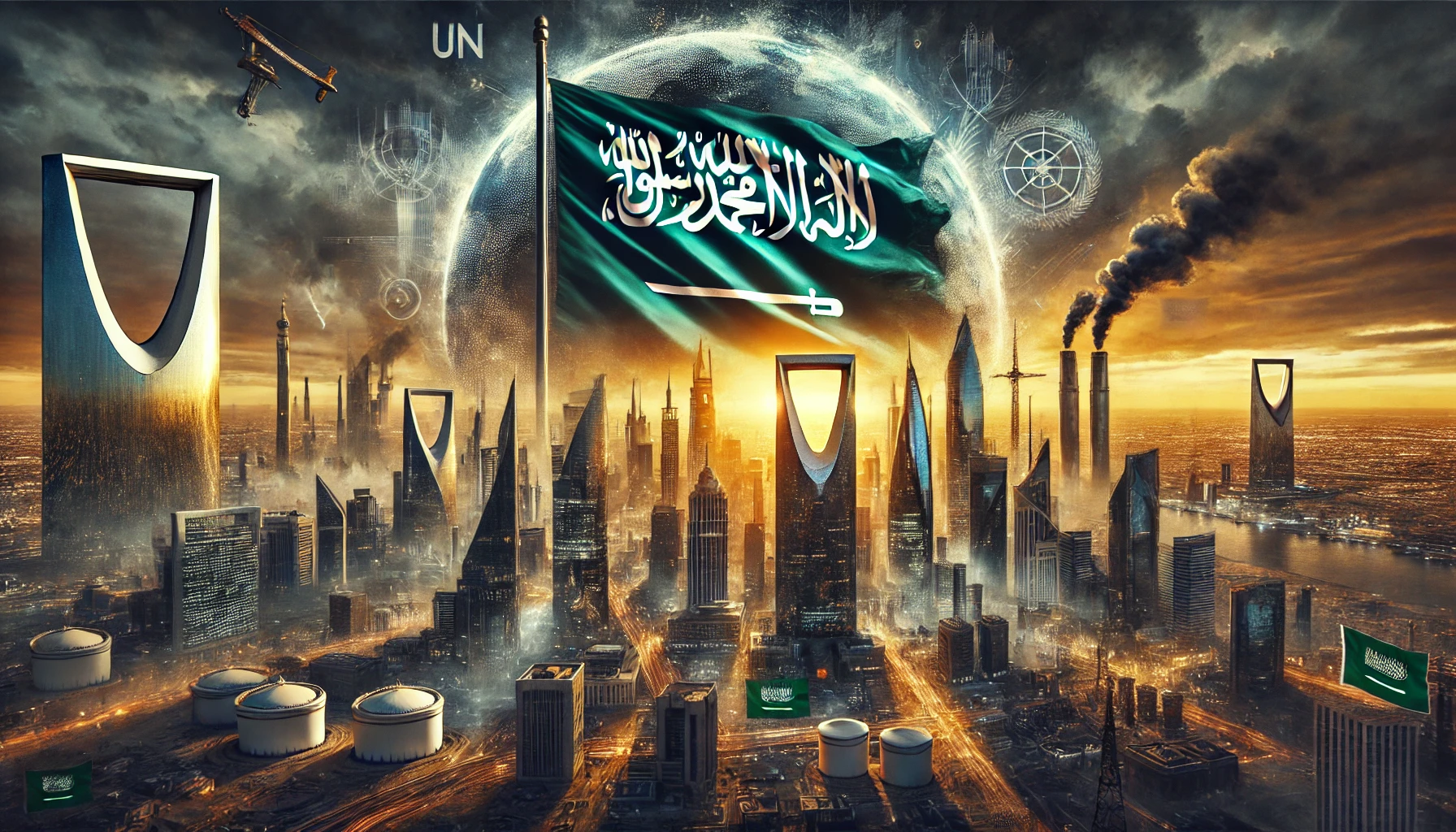
Is the new world order in Saudi Arabia a threat to western powers? Since Crown Prince Mohammed bin Salman (MBS) took over, a lot has changed in Saudi Arabia and this has significantly reshaped global power structures. This move signifies an alternate geopolitical orientation that pits the traditional West against the ambitions of Prince MBS. There have been concerns regarding Saudi Arabia’s increasing influence through the Vision 2030 initiative as well as the establishment of stronger economic and diplomatic relations with China, Russia and other emerging economies.
In addition, tensions between Riyadh and Western capitals are simmering as the Kingdom repositions itself globally while flexing its geopolitical muscles and diversifying its economy. Is it that Saudi is working against western interests or just seeking more independence in a multipolar world? The article examines some statecraft by Saudi Arabia, implications for global power politics and how the West has responded.
Saudi Arabia’s Vision 2030: A Game-Changer
Vision 2030, imposed in 2016, is a wide-ranging economic and social reform program designed to diminish Saudi Arabia’s reliance on oil and make it a technology, tourism and entertainment leader. These include:
- Economic Diversification: Boosting industries such as renewable energy, tourism and entertainment. Notable among these are NEOM which is a futuristic smart city and Red Sea Project, an upscale tourism plan.
- Social and Cultural Reforms: Removing the ban on women driving, opening cinemas and relaxing religious strictures to attract worldwide investors and tourists.
- Defense and Military Expansion: Increased military spending as well as domestic production of arms so that western defense companies can be avoided.
- Financial Independence: Saudi Arabia would be transformed into one of the world’s main global investors through PIF investments in various sectors around the globe.
These changes aim at making Saudi Arabia self-sufficient power devoid of Western influences. Nevertheless, they also give rise to concerns about whether or not the Kingdom will continue to follow Western economic interests along with security ones.
Saudi Arabia’s Geopolitical Shift: A New Power Balance?
In the past, Saudi Arabia has appeared to be closer to Europe and America. However, currently it is establishing much stronger ties with China, Russia and other non-Western powers. The occurrence of several key events helps to illustrate this change:
1. Strengthening Economic Ties with China
- As a matter of fact, China is now its biggest trading partner.
- A year later in 2022, Saudi Arabia entered into a $10 billion energy deal with China.
- Joining BRICS economic alliance in 2024 indicated a higher degree of commitment towards non-Western economies by the Kingdom.
- Under discussion is the possibility of pricing oil in Yuan as opposed to dollars that might weaken the petrodollar system which forms the foundation for American economic might.
2. Military and Strategic Cooperation with Russia
- Saudi Arabia and Russia have been able to strengthen their OPEC + alliance through this agreement thereby controlling global oil prices as well as reducing western influence.
- In 2021, Russia signed an agreement on military cooperation with Saudi Arabia thus overcoming dependence on one major supplier – USA.
- Despite Western sanctions against Moscow, Saudi investments into Russian industries keep coming.
3. Normalization with Iran and Regional Diplomacy
- By March 2023, diplomatic relationship was re-established between Iran and Saudi Arabia through Chinese intervention.
- US influence in the Middle East would be reduced while making Saudi Arabia look like a regional power broker after having made such a shift.
- The Kingdom is also arbitrating Sudan and Yemen conflicts, broadening its diplomatic mandate beyond the Gulf region.
This move indicates that Saudi Arabia is no longer a passive Western ally but an independent force pursuing its own strategic interests.
Implications for Western Powers
Saudi Arabia’s increased assertiveness creates difficulties for western powers. Economic power, global influence, and military alliances are three key areas in which Riyadh’s shift affects the West.
1. Economic Power and the Decline of the Petrodollar
One of the most significant concerns for the U.S. is Saudi Arabia’s willingness to trade oil in currencies other than the U.S. dollar. The petrodollar system, established in the 1970s, has allowed the U.S. to maintain global economic dominance. If Saudi Arabia moves toward using the Chinese yuan or a BRICS currency, it could undermine the dollar’s global reserve status, leading to economic instability in the West.
2. Declining U.S. Influence in the Middle East
- American military presence in this region might be jeopardized because Saudi Arabian is seeking to reduce reliance on US security guarantees.
- China and Russia are becoming more influential partners with nations around the Persian Gulf thus reducing Western leverage through diplomacy.
- Saudi Arabia has grown from a US client to a partner in the global arena, which has led to a shift in dynamics.
3. Military and Strategic Shifts
- Now, Saudi Arabia is developing its own arms industry so as to reduce reliance on American weapons.
- It’s worth mentioning that Saudi Arabia bought military technology from Russia, China and Turkey thus challenging Western defense contractors.
- The significance of U.S. military bases in this country may diminish, ending the era of hegemony.
These developments indicate that Western powers must adapt to a new reality where Saudi Arabia operates as an independent global force.
Is Saudi Arabia a Threat to the West?
Does its rise represent a danger towards western interests? It’s not easy to answer this question with a simple yes or no.
Arguments for a Threat
- Economic Disruption: In case Saudi decides not to deal with dollars anymore, this could harm western economies.
- Geopolitical Competition: The bilateral ties between China and Russia on one side and KSA on other hand can balance off each other against western influence within the Middle East as well as Africa.
- Energy Leverage: Since it is an oil giant, Saudi Arabia can change fuel rates affecting Europe and world markets at large.
Arguments Against a Threat
- Economic Interdependence: The US, Europe and Saudi Arabia have strong bonds through trade, investments and defense purchases.
- Strategic Alignment on Key Issues: Still, the Kingdom shares with the West the need for fighting against terrorism, stabilizing global energy markets and dealing with regional conflicts.
- Soft Power and Modernization: This country has decided to open up to tourists from around the world, the entertainment sector as well as technology investors among others. Instead of being viewed as a threat it is seen as opportunities.
While Saudi Arabia is shifting away from total Western dependence, its primary goal appears to be greater autonomy rather than outright confrontation.
How the West is Responding
Recognizing Saudi Arabia’s rising influence, Western nations are adjusting their strategies:
- Rebuilding Diplomatic Ties: Both America and Europe are trying to improve their ties through new trade and military agreements.
- Encouraging Gulf Cooperation: In order to counterbalance Saudi’s sway, Western powers are cooperating more closely with UAE (United Arab Emirates), Qatar and Egypt.
- Investing in Alternative Energy: In an attempt to lower dependence on Saudi oil western nations are focusing on renewable energy projects which have been fast-tracked over time.
- Strengthening Military Partnerships: NATO is maintaining its strategic relations within the Middle East via strategic partners.
The responses imply that the West is not out to instigate a direct confrontation but to maintain its strong ties in spite of the new role accorded to Saudi Arabia.
Conclusion: A New Global Order
Saudi Arabia as an emerging independent power has shifted the geopolitical landscape. By diversifying its economy, forging new alliances and increasing its influence, The Kingdom signals a shift toward multi-polarity where western supremacy is no longer unchallenged.
However, this does not mean that Saudi Arabia is directly opposed to the west. Instead, it is trying to be a sovereign powerhouse which works together with different global actors instead of supporting one side only.
What this means for the west though is clear; either adjust or else be left behind. In order to ensure long-term stability and cooperation within the changing global balance of power, Western powers need to engage with Saudi Arabia as an equal partner rather than a mere client state.
FAQs
What is Saudi Arabia’s Vision 2030?
Vision 2030 is a strategic initiative aimed at diversifying Saudi Arabia’s economy, reducing its reliance on oil, and transforming the country into a global hub for tourism, technology, and investment.
Why is Saudi Arabia strengthening ties with China and Russia?
Saudi Arabia is seeking to expand its geopolitical influence and reduce its dependence on Western powers by forming stronger economic and military partnerships with China, Russia, and emerging global players.
How does Saudi Arabia’s shift impact the petrodollar system?
If Saudi Arabia starts pricing oil in Chinese yuan or other currencies instead of the U.S. dollar, it could weaken the petrodollar system and challenge the economic dominance of the West.
Is Saudi Arabia becoming a threat to Western powers?
While Saudi Arabia is asserting greater independence, it is not necessarily a direct threat to the West. Instead, it is positioning itself as a sovereign power with multiple alliances rather than relying solely on Western influence.
How are Western nations responding to Saudi Arabia’s geopolitical shift?
The West is adjusting its diplomatic and strategic approach by strengthening partnerships with other Gulf nations, investing in renewable energy, and maintaining military cooperation with Saudi Arabia to ensure continued collaboration.