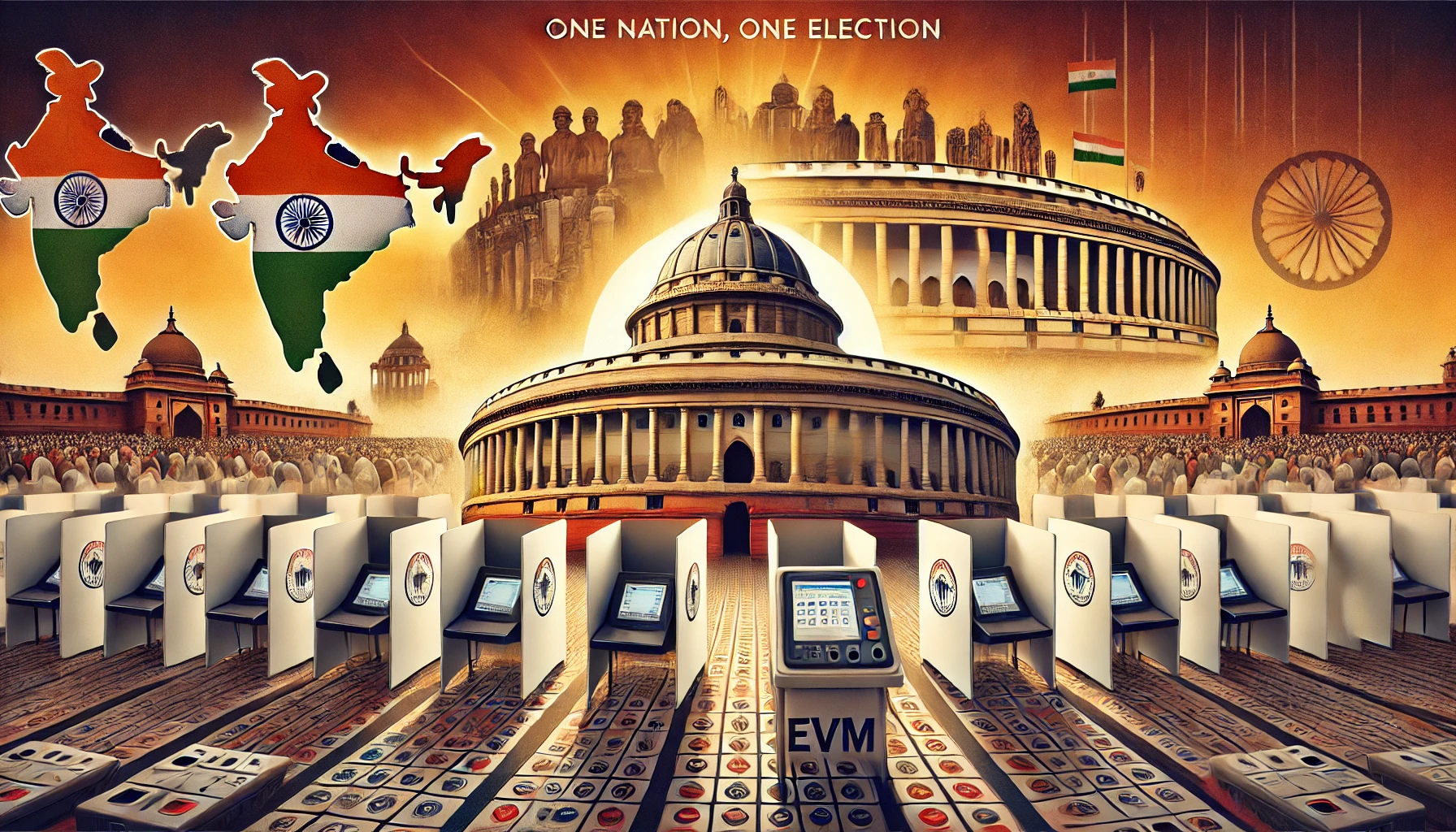
The proposal, “One Nation, One Election” made by the Prime Minister Narendra Modi has caused one of the most interesting discussions in India. The thrust of the idea is to conduct elections for the Lok Sabha (the lower house of Parliament) and all State Legislative Assemblies together, every five years. Supporters claim that this could improve governance and cut election costs, while detractors argue that it will negatively affect India’s federalism and democracy.
Historical Context of Simultaneous Elections in India
Simultaneous elections were common practice during and immediately after India gained its independence. The synchronizing elections between the central government and state government began in 1952 and lasted until 1967. This norm was interrupted after the elections of some state assemblies and the Lok Sabha due to the dissolution of assemblies in the late 1960s, which formed the pattern of staggering elections. The creation of ONOE attempts to restore the synchronized assembly and parliament election system to achieve elections in unison across the nation.
Objectives and Rationale Behind One Nation, One Election
Here are the primary objectives of ONOE, or One Nation One Election:
- Reduction in Electoral Expenditure: Elections are expensive due to overheads in security expenses, logistics, and administrative functions. Conducting elections for both state and national levels at the same time can help cut down on these costs.
- Minimization of Governance Disruptions: The Model Code of Conduct, or MCC, is in place during elections, which can put a halt to government projects and policies that need a decision to be made. Running elections simultaneously on a set schedule would minimize the interruptions and provide for smooth governance.
- Enhanced Policy Continuity: Synchronized elections would mean that both central and state governments would have a common policy making period as they would enable them to have simultaneous policy implementation.
Constitutional and Logistical Challenges
In order to implement the ONOE plan, a number of logistical difficulties and constitutional amendments would need to be tackled first:
- Constitutional Amendments: Article 83 and 172 of the Indian Constitution would require alterations in order to allow synchronized elections on a national and state level. Gaining a two thirds majority in the parliament and approval of at least half the state legislatures would be necessary.
- Synchronization of Electoral Cycles: Aligning the tenure of assemblies with the Lok Sabha would involve increasing or decreasing the duration of their existing cycles, which can prove to be unpopular among the general public and other political leaders.
- Resource Allocation: The possibility of conducting nationwide elections simultaneously has ramifications. In order to ensure the process is seamless, election officials and security personnel would need to be deployed in massive numbers alongside EVMs.
Implications for Federalism
Critics of ONOE have claimed that this approach could jeopardize the federal system of India:
- Diminished Regional Representation: Elections at the same time could mean that important national matters take precedence. This can prove detrimental to area specific political parties and leaders to derive power which in turn can lead to a more authoritative political scenario.
- Erosion of State Autonomy: Scheduling state elections with national polls can put pressure on the states to follow central government policies, making it harder for the states to solve their own local problems.
- Potential Marginalization of Regional Parties: The competitive electoral resources of national parties can make it difficult for regional parties to gain visibility, overpowering them in the political spectrum.
Democratic Considerations
Several issues related to the outline suggest a major alteration about how the Indian democracy works:
- Voter Behavior and Decision-Making: When voting for both the state and central government is done simultaneously, it could cause disenfranchisement among the voters which results in confusion or worse state elections being determined by national policies.
- Accountability and Responsiveness: Election monitoring might be the only way to ensure governments are held to account. With the reduction of elections, a government’s accountability to its people is sure to falter.
- Impact on Political Engagement: Elections serve to actively engage the populace with leaders and various political groups. Leaving a gap of five years in between elections is sure to create apathy between the voters and the elected representatives.
Political Reactions and Public Discourse
Diverse reactions have emerged following the ONOE proposal:
- Support from the Ruling Party: BJP and its allies have shown support to the ONOE proposal, claiming costs will decrease and efficiency will improve.
- Opposition from Regional Parties: Many regional political parties fear that elimination of single election vote will centralize governance and further erode their authority.
- Civil Society and Expert Opinions: Many experts and civil society members debate the proposal and its potential consequences to India’s democratic values.
Conclusion
The “One Nation, One Election” idea excludes Indian citizens in many ways, is beneficial to a select group, and encompasses some challenges. Most notably, it completely disregard federalism, lowers accountability, and severely complicates logistics. Even though “One Nation, One Election” has reduced budgeting expenditure and simplified governance, these goals cannot outweigh the implications of this proposal. Remember: India is a democracy, and fully respecting its citizens requires thoughtful debate with various political movers and the public at large.
FAQs
What is the ‘One Nation, One Election’ proposal?
The ‘One Nation, One Election’ proposal aims to hold Lok Sabha and State Assembly elections simultaneously across India every five years.
Why is ‘One Nation, One Election’ being proposed?
The key reasons behind the proposal include reducing election expenses, minimizing governance disruptions, and ensuring policy continuity at both central and state levels.
What constitutional changes are needed to implement ‘One Nation, One Election’?
It requires amending Articles 83 and 172 of the Indian Constitution, along with gaining approval from at least half of the state legislatures to synchronize election cycles.
How does ‘One Nation, One Election’ impact federalism in India?
Critics argue it weakens federalism by reducing state autonomy, diminishing regional representation, and marginalizing regional political parties.
What are the main concerns raised by opposition parties and experts?
Concerns include the erosion of state independence, potential voter confusion, reduced political engagement, and the risk of national issues overshadowing regional concerns.