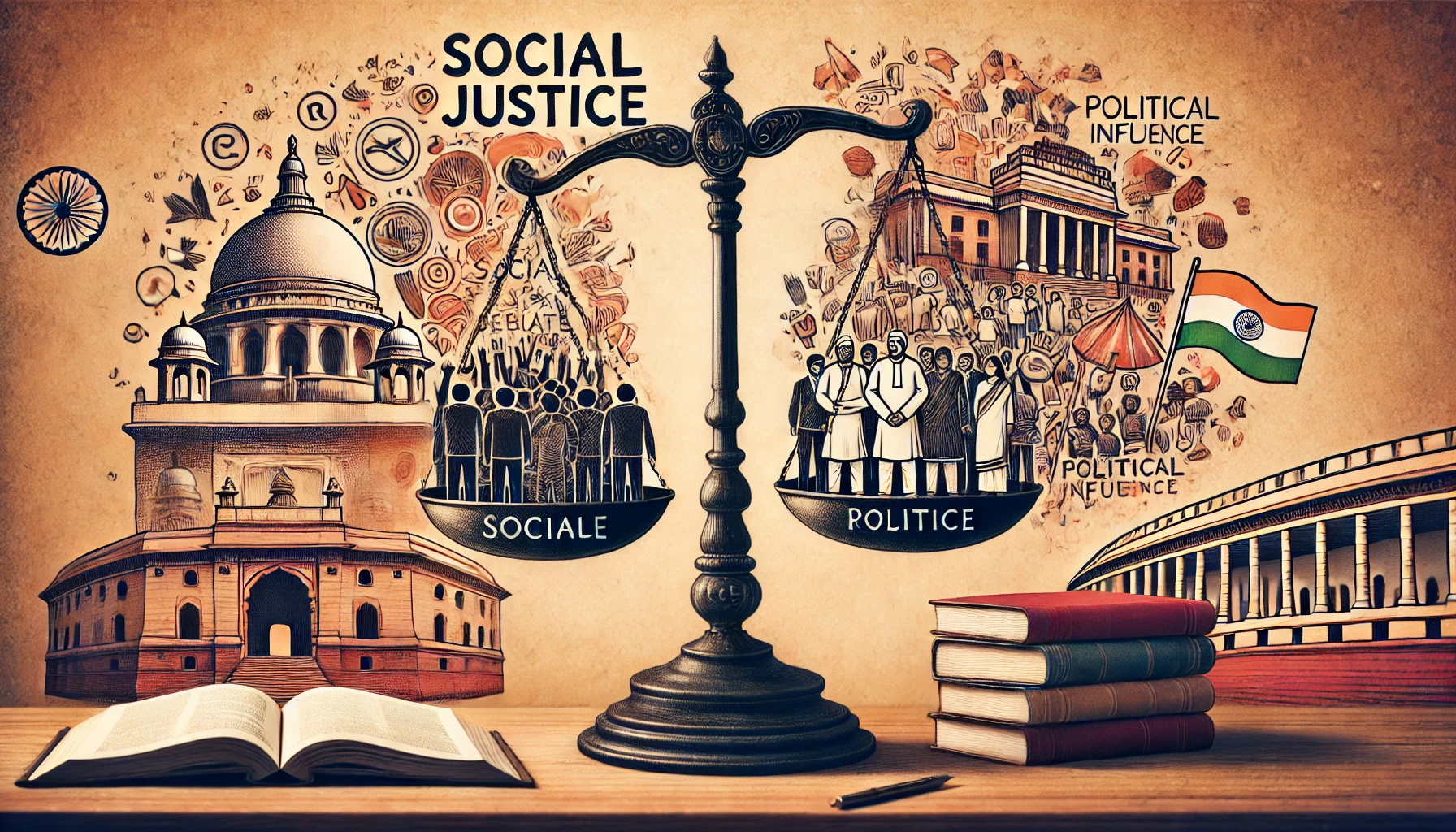
As an affirmative action policy meant to benefit historically disadvantaged groups, India’s reservation system has always been controversial. Its primary focus is to provide social justice, but there are those who believe it has shifted into a pawn for us politics. The focus of this article is to highlight all aspects of the reservation system including its history, aim, and the debates that accompany its execution.
Historical Context and Objectives of Reservation
The reservation system in India can be traced back to the British colonial rule in the early 20th century with them attempting to help specific communities suffering from social and developmental issues. When India became independent, the makers of the Constitution were well aware of the inequalities present in society and took steps to improve the conditions of Scheduled Castes and Scheduled Tribes by providing reserved seats for them in legislation, education, and even government jobs. Some of the key goals were:
- Rectify Historical Injustices: Assist in solving discrimination that has taken place for centuries and offer the disadvantaged population a chance to thrive.
- Promote Social Inclusion: Bring previously marginalized people into the mainstream economy.
- Ensure Political Representation: Strengthen the voice of SCs and STs in the legislation.
Expansion to Other Backward Classes (OBCs)
Following the Mandal Commission’s recommendations, in 1990, OBCs were included in the reservation list and were allocated 27 percent of the government jobs and seats in the educational institutions. The intention was to improve the conditions of socially and educationally backward classes, however, it led to severe protests regarding the definition of backwardness and the levels of meritocracy.
Reservations Based on Economic Criteria
In 2019, the introduction of the new constitutional amendment, which provides a reservation of ten percent to EWS in the general category, marked the first time that criteria based on complete financial status rather than caste was set. Detractors argued that this amendment sought to gain favor from upper caste voters prior to elections, undermining its ‘social justice’ mandate.
Political Exploitation of Reservation Policies
The reservation system has for quite a time been mixed with politics and many parties use and abuse it to capture vote banks. Several examples can be cited to support this:
Electoral Promises: They put forward a lot of increased reservation promises or suggest the inclusion of certain community people in the reserved category.
Community Agitations: In affluent areas like Gujarat and Haryana, the Patels and Jats have resorted to violence to get their government mandated quotas, or reservations, which have turned out to be quite pointless, something the government has reluctantly accepted to do.
Judicial Interventions: The quota reservations policy, infused with political agenda, was brought under restrictions by bounds of trivial politics, in which the court had to extend its boundaries and steps beyond the 50% threshold allocation quota, taking a more neutral stance.
Criticisms and Challenges
These critiques pose the following challenges to the reservation system:
- Perpetuation of Caste Identities: In rather caste sensitive societies, instead of diminishing caste distinctions granting reservations becomes a caste sensitive issue that simplifies society and allots caste hierarchy.
- Economic Disparities Within Castes: Castes with economical inequalities, which were reserved on the basis of caste purely were considered too simplistic, instead economical measures must also be brought in.
- Meritocracy Concerns: Important resources like the public sector and the general economy does not function with the use of force due to reserved seats, only works in a free society where services must be earned, never supplied.
- Political Manipulation: Reasonable attention needs to be paid to the impact of these reservation policies on the politically sensitive issues of marginalization as an attempt to get votes from those who need genuine attention.
The Way Forward
To reconcile the aims of social justice with the risk of political abuse, a number of steps have to be undertaken:
- Periodic Review: Audits on the reservation system have to be done to make sure that there is no misuse of it and that the deserving people are benefitted.
- Economic Criteria Integration: The economic status of a person should be sufficient for addressing the intra caste problems and the resources should be divided more efficiently.
- Enhanced Educational Opportunities: Focusing on primary and secondary school education for disadvantaged groups will lessen the need for strong affirmative action in higher education.
- Awareness and Sensitization: Understanding other communities and empathy has to be taught to strengthen society which has been divided over reservations.
Conclusion
In the Indian context, the reservation system is often caught between two contradictory objectives, social justice and political self interest. It has undoubtedly brought change in the lives of a number of underprivileged people but its political based nature has made it necessary to change. Reservations are meant to provide opportunities to the underserved and vulnerable populations, but if used as tools of political manipulation, they result in complete disenfranchisement, therefore, in order for reform to mark progress, a clear and reasoned approach must be adopted.
FAQs
What is the main purpose of India’s reservation system?
The reservation system aims to rectify historical injustices, promote social inclusion, and ensure political representation for marginalized communities.
When was the reservation system expanded to include OBCs?
In 1990, following the Mandal Commission’s recommendations, OBCs were granted 27% reservation in government jobs and educational institutions.
What is the Economic Weaker Section (EWS) reservation?
Introduced in 2019, the EWS reservation provides 10% quota for economically disadvantaged individuals in the general category, based on financial criteria rather than caste.
Why is the reservation system criticized?
Critics argue it perpetuates caste identities, disregards economic disparities within castes, raises concerns about meritocracy, and is often exploited for political gains.
What are possible reforms for the reservation system?
Suggested reforms include periodic reviews, integrating economic criteria, improving educational access, and reducing political exploitation of reservations.